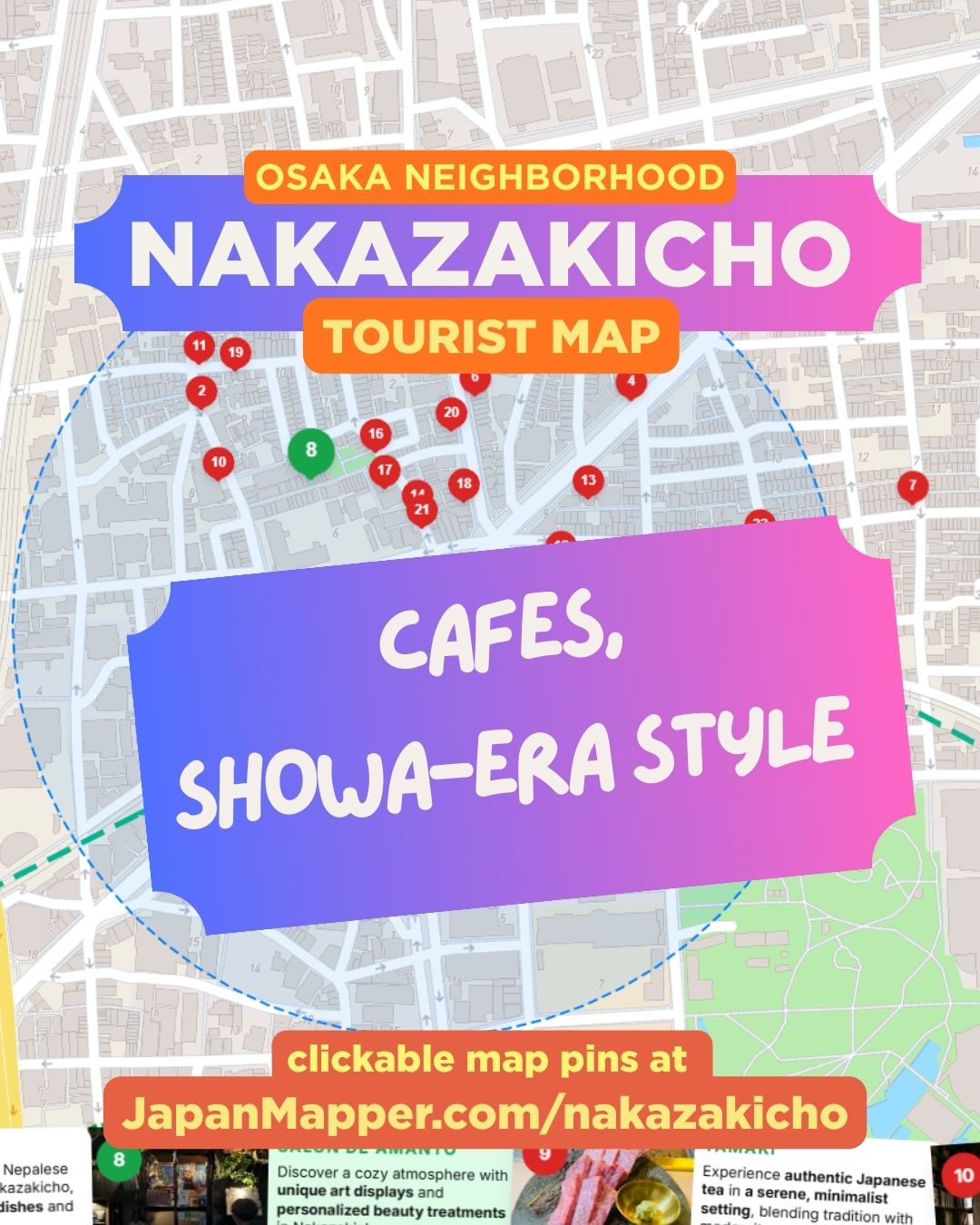
Nakazakicho: Vintage Alleys, Slow Coffee, and the Hidden Soul of Osaka
If you’re tired of the neon-soaked sensory overload of Dotonbori and want to see where Osaka hides its soul, head to Nakazakicho (中崎町).
Just a ten-minute walk from the glass-and-steel skyscrapers of Umeda, this pocket of north Osaka feels like a glitch in the matrix—or a portal back to the 1930s. Duck past the railway viaducts and the roar of the metropolis vanishes, replaced by a quiet maze of narrow alleys, tangled overhead power lines, sleeping cats, and 100-year-old wooden row houses (nagaya). It’s a side of Osaka that shouldn’t exist in a city this modern—and yet, it thrives.
The Neighborhood That Defied the Odds
Most of Osaka was leveled by air raids during WWII, and much of what survived was later bulldozed during the property craze of the 1980s bubble era. Nakazakicho, however, is a certified miracle.
Spared from wartime firebombs—local folklore claims the tiny stone Jizo guardian statues tucked in the alleys steered the flames away—the neighborhood also managed to slip right past modern developers.
By the late 1990s, the area was at risk of becoming a ghost town as its aging residents dwindled and the wooden nagaya fell into disrepair. Then, in 2001, an artist and dancer named Jun Amanto pried open an abandoned 120-year-old house. Working alongside volunteers, he scraped the plaster, restored the wooden beams, and opened Salon de AManTo.
What began as a single community cafe sparked a full-blown DIY renaissance. Older residents embraced the newcomers, bringing tea and tools, and soon young creatives, leather artisans, and vintage collectors moved in. Today, over a hundred creative hideouts are tucked behind the neighborhood's weathered wooden facades.
When to Go & How to Visit
Before you go, keep in mind that Nakazakicho is not a curated theme park like Shinsekai; it is a living, breathing residential community.
- The Early Morning Secret (9:00 AM – 11:00 AM): Vintage boutiques and trendy cafes don't stir until early afternoon, but early morning is pure magic. You’ll catch the scent of morning incense, see locals tending bonsai pots in car-free lanes, and experience the timeless architecture without crowds.
- The Afternoon Buzz (1:00 PM – 6:00 PM): This is when the shutters roll up and the neighborhood comes alive for shopping, gallery visits, and coffee hopping.
- Neighborhood Etiquette: Keep your voice down, don't block narrow alleyways with tripods, and respect privacy—people still hang their laundry overhead and leave their front doors ajar.
What to Do in Nakazakicho
Slow Down with Legendary Coffee
This isn't the place for "Loud Osaka" (the kind yelling "Eat 'til you drop!"). This is contemplative, artisan Osaka, where baristas treat a single pour like fine art.
- Salon de AManTo (天人): The "godfather" of the neighborhood. The ivy-choked exterior looks straight out of a Studio Ghibli film. Inside, mismatched vintage armchairs, jazz records, creaky floorboards, and a spiral staircase create an unmatched community warmth.
- Utena Kissaten (うてな喫茶店): A temple of slow living. Coffee here is brewed via nel drip—hot water poured drop-by-drop through a cotton flannel filter over several minutes. The result is a viscous, chocolatey, velvety brew. Put your phone away, soak in the ticking clocks, and savor every sip.
- Neel Nakazakicho: The stylish modern favorite, easily recognized by its signature pear logo. Set across a cozy three-story renovated home, they’re famous for giant, paper-thin, buttery sugar-butter crepes and artisanal lattes.
- Winter Coziness: In the colder months, seek out cafes offering a kotatsu (a traditional low table fitted with a warm heater and quilt). Tucking your legs under the blanket with a warm bowl of zenzai (sweet red-bean soup with toasted mochi) makes leaving nearly impossible.
Hunt for True Vintage & Archive Fashion
Nakazakicho's thrift scene is less about fast-fashion graphic tees and more about curation, heritage textiles, and rare design.
- Green Pepe: A vibrant time machine packed with 1970s Showa-era kitsch, psychedelic homeware, retro rotary phones, and vintage Japanese fashion.
- Antique Boro (ぼろ) Textiles: Look for specialty textile shops stocking authentic boro—garments painstakingly patched and re-stitched over generations by northern Japanese farmers using indigo-dyed hemp and cotton scraps with white sashiko needlework. These museum-worthy pieces are prized by worldwide designers.
- Japanese Designer Archives: Tucked into quiet second-floor lofts, several independent boutiques specialize in vintage archive pieces from titans of Japanese fashion, including Yohji Yamamoto, Comme des Garçons, and Issey Miyake.
- Indie Makers: You'll encounter tiny workshops where artisans hand-craft leather bags, hand-pour silver jewelry, and display local ceramics right beside their workbenches.
Discover Cinematic Corners & Hidden Shrines
Part of the fun of Nakazakicho is ditching Google Maps and intentionally losing your bearings.
- Planet +1: A legendary micro-cinema with barely a dozen seats, screening rare 1930s black-and-white prints, forgotten European cinema, and avant-garde indie films. It feels like a secret haven pulled straight from a Haruki Murakami novel.
- Hakuryu-okami Shrine (白龍大神): Hidden so deep within a residential crevice that you'll swear you've walked into someone’s private garden. Dedicated to a white snake deity, this pocket shrine is bordered by crisp white walls and framed by overhanging eaves.
- The "Anime" Aesthetic: With rusted vintage mailboxes, moss clinging to tiled eaves, and skies webbed with telephone wires, the neighborhood echoes the nostalgic urban textures of animated classics like Whisper of the Heart and From Up on Poppy Hill. It’s a dream for street photographers.
Practical Tips for Your Visit
- Getting There: Just a 10-minute walk northeast from JR Osaka / Hankyu Umeda Station, or take the Tanimachi Subway Line directly to Nakazakicho Station (Exit 2 or 4).
- Cash is Essential: Many of the best hole-in-the-wall kissaten, small galleries, and vintage shops are operated by solo owners and do not accept credit cards or IC cards.
- Flexible Schedules: Hours can be whimsical. Some shops open only Thursday through Sunday or close without warning when the owner is off sourcing antiques. Embrace the unpredictability.
The Bottom Line
Osaka is celebrated for its bombastic street food, neon-lit canals, and hearty belly laughs. But if you want to understand the city's quiet heart, cross under the tracks into Nakazakicho. Spend a couple of hours nursing a nel-drip coffee, browsing indigo textiles, and watching laundry sway above century-old timber—and you’ll discover an unforgettable side of Japan that modern skyscrapers simply can't manufacture.