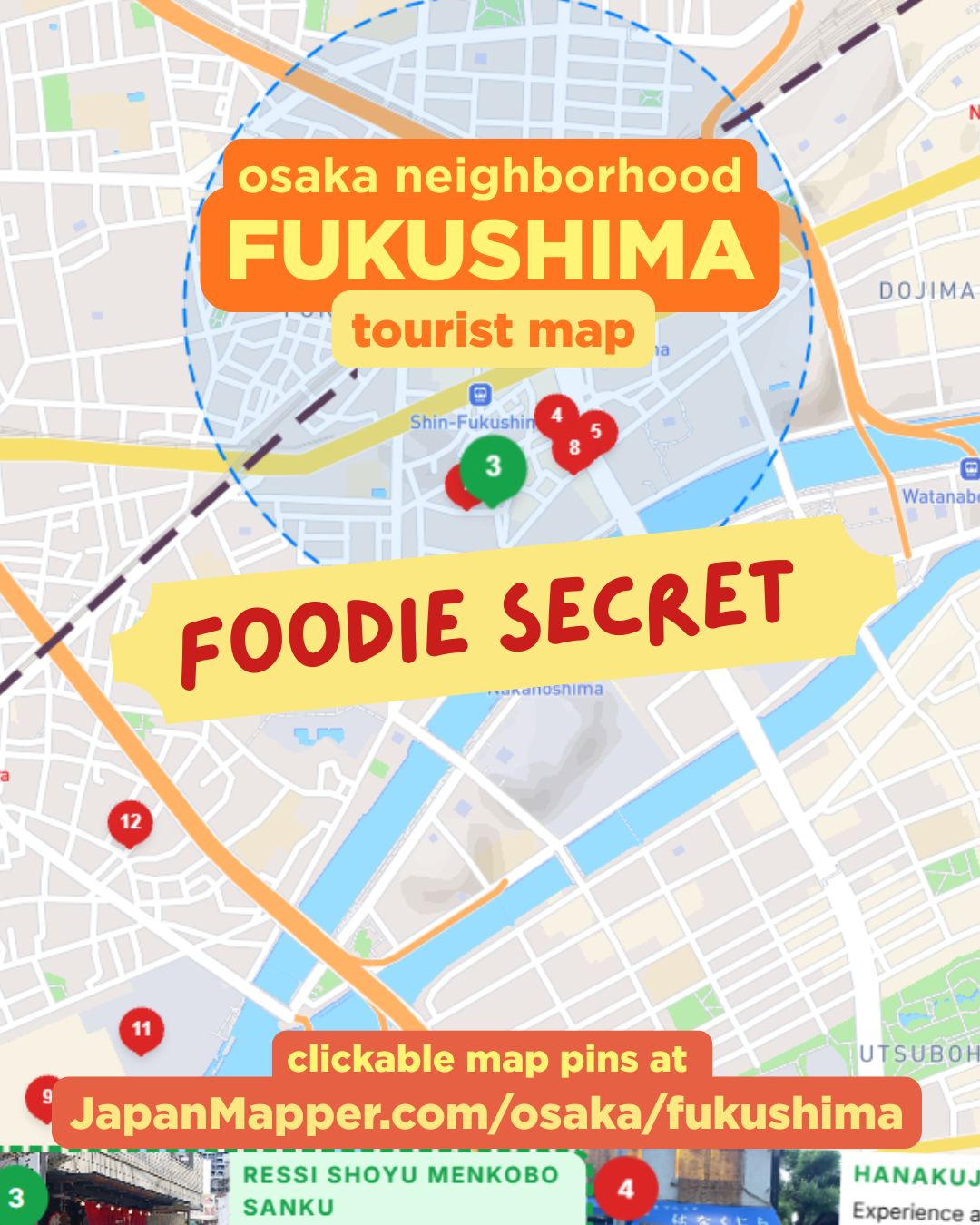
A short walk from Umeda's chaos, this riverside ward quietly does everything better — the food, the nightlife, the history, and the hidden oddities
Just a short distance from the organized mayhem of Umeda, Fukushima is the kind of neighborhood that rewards wandering. Michelin-starred restaurants and cheap, exceptional yakitori under the train tracks occupy the same street. Gleaming riverside apartments stand beside Showa-era alleyways where almost nothing has changed in fifty years. It's unpretentious, deeply local, and very good at most things it attempts.
First Things First: No, Not That Fukushima
It comes up every time, so let's settle it early. When most international visitors hear "Fukushima," they think of the prefecture in eastern Japan and the events of 2011. This is an entirely different place. Fukushima Ward is a neighborhood within Osaka City in western Japan — more than 600 kilometers away. The name is a coincidence, the association is misleading, and the ward itself is completely unrelated to anything in the northeast. It's safe, lively, and entirely worth your time.
The Neighborhood in Two Moods
Fukushima operates on a reliable split. During the day, it's a relaxed riverside district — walkable, green in patches, well-supplied with the kind of specialty coffee shops that take their sourcing seriously. By evening, it shifts into one of Osaka's most genuinely exciting dining and drinking corridors, without the tourist density that inflates prices and shortens patience elsewhere.
The food scene here is the real draw. Because the neighborhood attracts working locals rather than tour groups, quality is high and value is exceptional. A single block can hold a restaurant with serious culinary credentials alongside a counter grill where the yakitori costs almost nothing and tastes extraordinary. Both are worth your time, and neither is trying to be the other.
The Places to Anchor Your Visit
Hotarumachi is the neighborhood's polished centerpiece — a riverside complex sitting along the Dojima River that manages to feel genuinely pleasant rather than contrived. It's a good base for an afternoon walk, and river cruises departing from here offer a surprisingly different perspective on central Osaka.
Fukumaru Street, running beneath the elevated JR train tracks, is where Fukushima's nightlife concentrates. Izakayas, craft beer spots, and local counters line the alley in the kind of cheerful, low-lit density that makes it easy to lose track of time. It's casual, loud in the best way, and almost entirely populated by people who live nearby.
Fukushima Tenmangu Shrine offers the neighborhood's quietest contrast — a small, composed sanctuary tucked into the urban fabric, less visited than its famous counterpart in Osaka proper, and more atmospheric for it.
The Details That Separate Good Trips from Great Ones
Josse Shindo is a narrow, deep alleyway that functions as a living record of Showa-era Osaka. The bars here are small, old, and run by people who have been doing this for decades. It's the kind of place that doesn't need to announce itself.
The Noda-Fuji wisteria is one of those seasonal secrets that most visitors miss entirely. While cherry blossom crowds descend on parks across Japan in late March and early April, Fukushima's wisteria blooms slightly later in a wash of purple that draws far smaller, more knowledgeable audiences. If your timing is right, it's one of the better floral spectacles in the Kansai region.
The Fukushima Seitan-dori Shopping Street carries one of the more unusual reputations in Osaka: it has quietly become known as a concentration point for fortune tellers, tarot readers, and palmists, drawing visitors from across the Kansai region to consult mystics operating between the ordinary storefronts. No one seems entirely sure why this particular arcade attracted them. The ambiguity is part of the appeal.
Pop Culture Hiding in Plain Sight
Fukushima is home to the headquarters of Asahi Broadcasting Corporation (ABC TV), based at Hotarumachi. The network has co-produced some of Japan's most enduring anime, including the long-running Precure franchise. For viewers of a certain era, a visit to Hotarumachi carries a quiet significance that isn't marked on any tourist map.
The Umeda Sky Building, one of Osaka's most architecturally distinctive landmarks and a recurring backdrop in Detective Conan films, is an easy walk from Fukushima and visible from much of the ward. It's technically across the border into the next district, but functionally it belongs to this corner of the city.
A Startup That Changed the World, Born in a Two-Story House
Fukushima doesn't look like the birthplace of a global technology company, but in 1918, a man named Konosuke Matsushita founded a small business here — initially selling an improved lightbulb socket out of a rented two-story house in the neighborhood. That company eventually became Panasonic.
Before that, Fukushima was a marshy farming village through much of the Edo period, later developing into a textile hub before its current identity as a residential and dining district took shape. The transitions have been significant, but something consistent runs through all of them — a practical, food-obsessed, merchant-class sensibility that still defines how the neighborhood carries itself today.
Fukushima covers enough ground for a full day, but its real strengths emerge over an evening. Come hungry, arrive without a fixed plan, and let the street under the train tracks make the decisions.